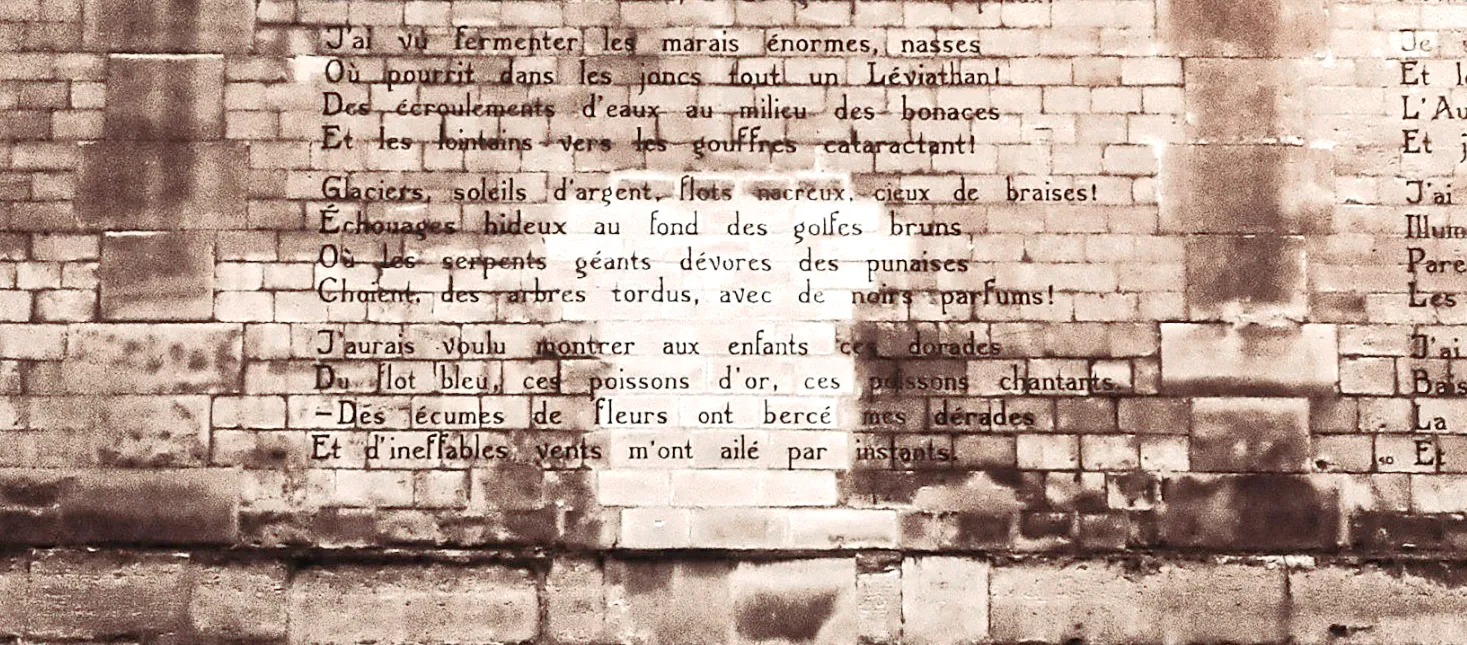



TL;DR: I built an algorithm that finds accidental haikus in old books. Some of them are weirdly good. This made me question who the real author is — the code, the original writer, or the reader.
#The Discovery
I found Dimitri Rataud’s Haïku Marinière — he blacks out pages from old books, keeps a few words, calls it poetry.
My reaction: isn’t this just cherry-picking with extra steps?
#The Algorithmic Mirror
That question bugged me enough to build GutenKu in 2023. I wrote code that scans 70,000+ Project Gutenberg books looking for word sequences that fit the 5-7-5 pattern. No writing. No intent. Just extraction.
If Rataud’s a fraud because he didn’t write the words, GutenKu is worse — it doesn’t even know what it’s selecting.
And yet. Some of these found haikus hit hard. They work. I didn’t expect that.
#The Reader as Author
Barthes argued that meaning comes from readers, not writers. If code produces words with no intention and people still find something in them — maybe poetry was never about the writing at all.
Maybe it’s about the reading. We decide to find meaning. The text is just raw material.
A few questions:
- If a poem moves you, does it matter how it was made?
- Does AI write, or do we project meaning onto noise?
- What’s the real difference between human curation and algorithmic selection?
#GutenGuess: The Game
I also made GutenGuess — you see a haiku, guess which book it came from. Six tries. Daily puzzle.
#Under the Hood
No LLMs. Genetic algorithms, NLP scoring, neural networks. Code is open source.

Perhaps poetry was never in the words themselves, but in the space between text and reader.
Explore More